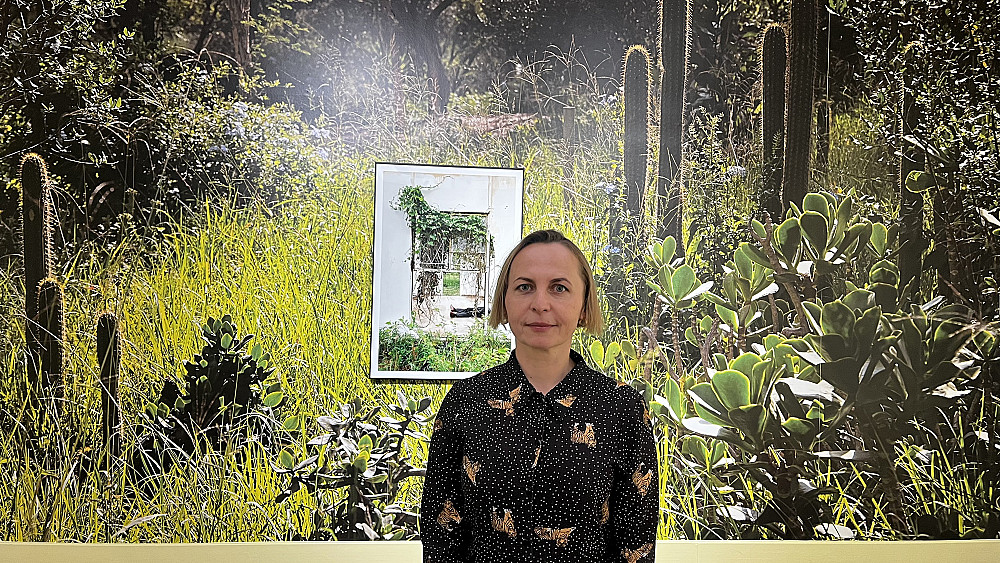
Meet 2026 Bridge Fellow Halina Suwalowska
News from Javett-UP
29 September 2026
The Javett-UP is pleased to host 2026 Bridge Fellow Halina Suwalowska, who will be visiting in September as part of the Bridge Fellowship Programme. Halina is a Senior Research Fellow in Global Health Bioethics at the Ethox Centre, University of Oxford. A sociologist by training, she completed her DPhil in Population Health at the University of Oxford in 2021. Her doctoral research explored the ethics and politics of implementing Minimally Invasive Autopsy technology in global health contexts.
The Bridge Fellowship Programme is a research partnership between Javett-UP and The Oxford Research Centre in the Humanities (TORCH) at the University of Oxford. The programme offers Oxford-based researchers a funded visiting fellowship of four to eight weeks at Javett-UP, providing opportunities to engage with the Centre’s exhibitions, programmes, collections, and diverse stakeholders.
In October, Halina will lead a workshop exploring themes of death, memory, time, and remembrance through the Javett-UP collection. Bringing together artists and practitioners from diverse fields, the workshop will combine ethical inquiry and creative practice, encouraging participants to develop personal artistic responses and new perspectives on mortality and continuing presence.
Previous Bridge Fellows include Dr Tinashe Mushakavanhu (2023), Dr Georgia Nasseh (2024), and Alyssa Ollivier-Tabukashvili (2025). Through this ongoing collaboration, the programme continues to foster meaningful exchanges between research, culture, and creative practice across institutional and geographic boundaries.
Halina is a member of the After the End project, which studies interdisciplinary approaches to lived experiences in the aftermath of global health crises, and of the Oxford–Johns Hopkins Global Infectious Disease Ethics Collaborative (GLIDE). Her research examines the ethical and social dimensions of death and dead bodies in global health. This includes caring for the dead during infectious disease outbreaks, the challenges faced by frontline staff and ‘last responders’, and the ethical complexities of handling unidentified bodies. She has conducted qualitative research in Africa, Asia, and Europe, working with frontline staff, death workers, and communities to understand how societies care for the dead during crises and beyond.
Halina has established methodologically innovative research projects and collaborations at the intersection of ethics, art, and heritage integrating academic research with creative and transdisciplinary approaches. Before joining the Ethox Centre, she worked at the Wellcome Trust in London.
